Daifo Journal
Switching from YepBooking: 3,400 members, zero downtime
Stormers R Badminton Centre moved 16 courts and 3,400 member accounts off YepBooking overnight — credit intact, nobody re-registered. The playbook.
本网站提供中文版本,是否切换到中文? This site is available in Chinese.

Daifo Journal
Stormers R Badminton Centre moved 16 courts and 3,400 member accounts off YepBooking overnight — credit intact, nobody re-registered. The playbook.
The reason most centre owners stay on a booking system they’ve outgrown isn’t the monthly fee. It’s the migration. Years of member records, thousands of dollars of prepaid credit sitting in customer accounts, and a regular crowd who will absolutely notice if their balance disappears on a Monday night. That risk is worth more than any feature list — so the switch keeps getting postponed.
Already decided to move?
You don't need to read a case study first. See Daifo's badminton court booking & scheduling software, or skip ahead and book a 20-minute demo — we'll walk through your current setup and tell you exactly what migrates.
On Sunday 20 September 2026, Stormers R Badminton Centre moved from YepBooking to Daifo. Sixteen courts, around 3,400 member accounts, and every dollar of stored credit. The centre didn’t close for a single trading hour, and not one player had to create a new account.
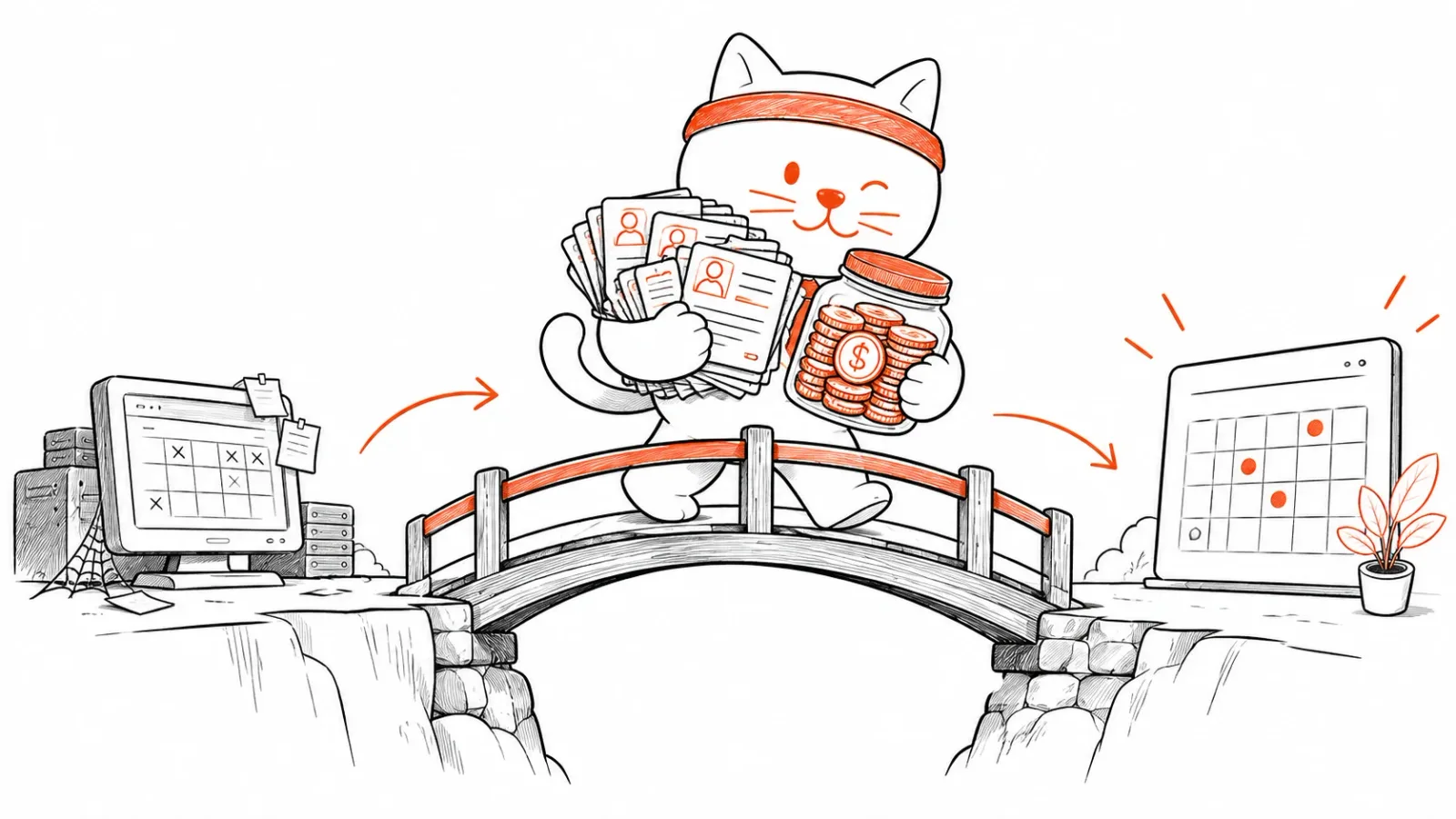
Here’s how it actually ran, and what you’d need to do to run the same play at your venue.
Stormers R Badminton Centre sits at Ravenhall in Melbourne’s west — 16 courts, running casual bookings, coaching and social sessions, and now taking bookings on Daifo. Like a large share of Australian badminton centres, it had spent several years on a yepbooking.com.au portal, with a substantial base of members holding prepaid credit.
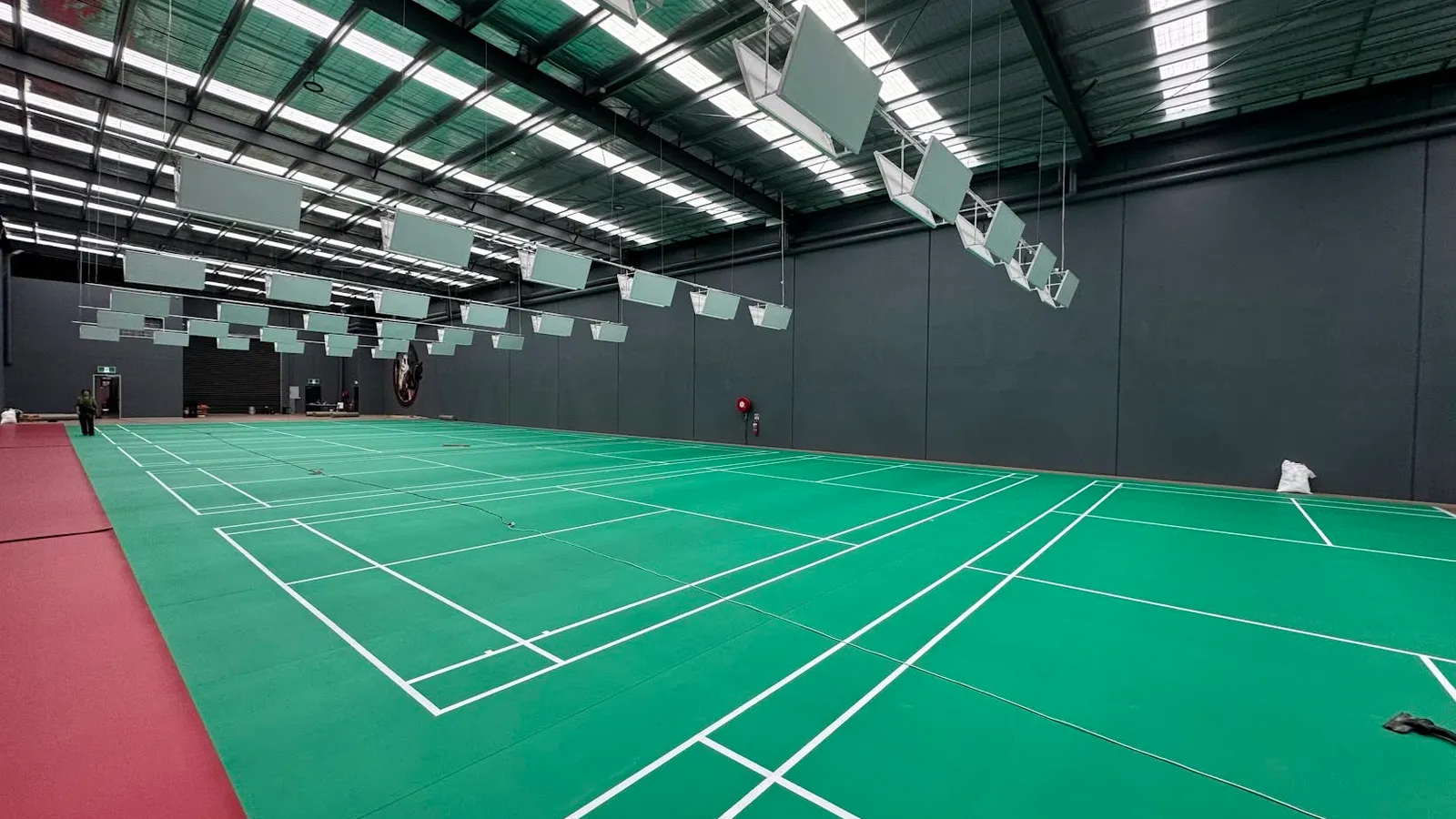
That’s a real migration, not a pilot. Big enough that if the data didn’t come across cleanly, everyone would know by Monday.
Not because of a feature comparison. Two things, in this order.
The push: support. After several years on the incumbent, the centre’s own read was that the software kept the calendar running, but when something needed attention there wasn’t much on the other end. For a venue doing 16 courts of trade a day, “we’ll get back to you” is not a support model — a booking problem at 7pm on a Friday is a queue at the front desk right now.
The pull: a TV at another centre. The owner was visiting Energy Badminton Centre in Springvale and saw the big screen at their entrance showing the day’s court schedule live — who’s on which court, what’s free, what’s coming up, updating itself off the booking system. No printouts, no staff member rewriting a whiteboard.
That was the moment. Not a spec sheet — a display doing a job their front desk was doing by hand. They got in touch with us shortly after.
It’s worth naming what actually happened there, because it’s how most of these conversations start: nobody wakes up wanting to migrate a booking system. They see a centre running better than theirs and want to know what it’s running on.
Once they’d decided they wanted to move, the conversation turned to risk. It always comes down to the same three questions, and feature comparisons come a distant fourth.
“What happens to my members’ credit?” Most badminton centres run on prepaid balances. Players top up $50 at the front desk and draw it down over a month. If those balances don’t survive the move, you’re facing a queue of refund arguments and a lot of goodwill spent for nothing.
“Do I have to close?” A centre that shuts for a day to “do the migration” loses a full day of court revenue, plus the socials, plus the coaching. For a 16-court venue, that’s not a rounding error.
“Will my regulars have to sign up again?” Asking 3,400 people to re-register is where migrations quietly fail. A meaningful slice of them simply don’t, and you find out three weeks later when the Tuesday night numbers are down.
Those three answers are what the cutover was designed around.
The whole process needs one thing from the venue: admin access to the existing system.
Before the switch — the venue hands over its YepBooking admin login. That’s it. No CSV exports, no spreadsheets, no asking staff to re-key member details after hours. Daifo’s support team pulls the data out, maps it into the Daifo schema and stages it for import. The owner’s job is to confirm the data looks right, not to produce it.
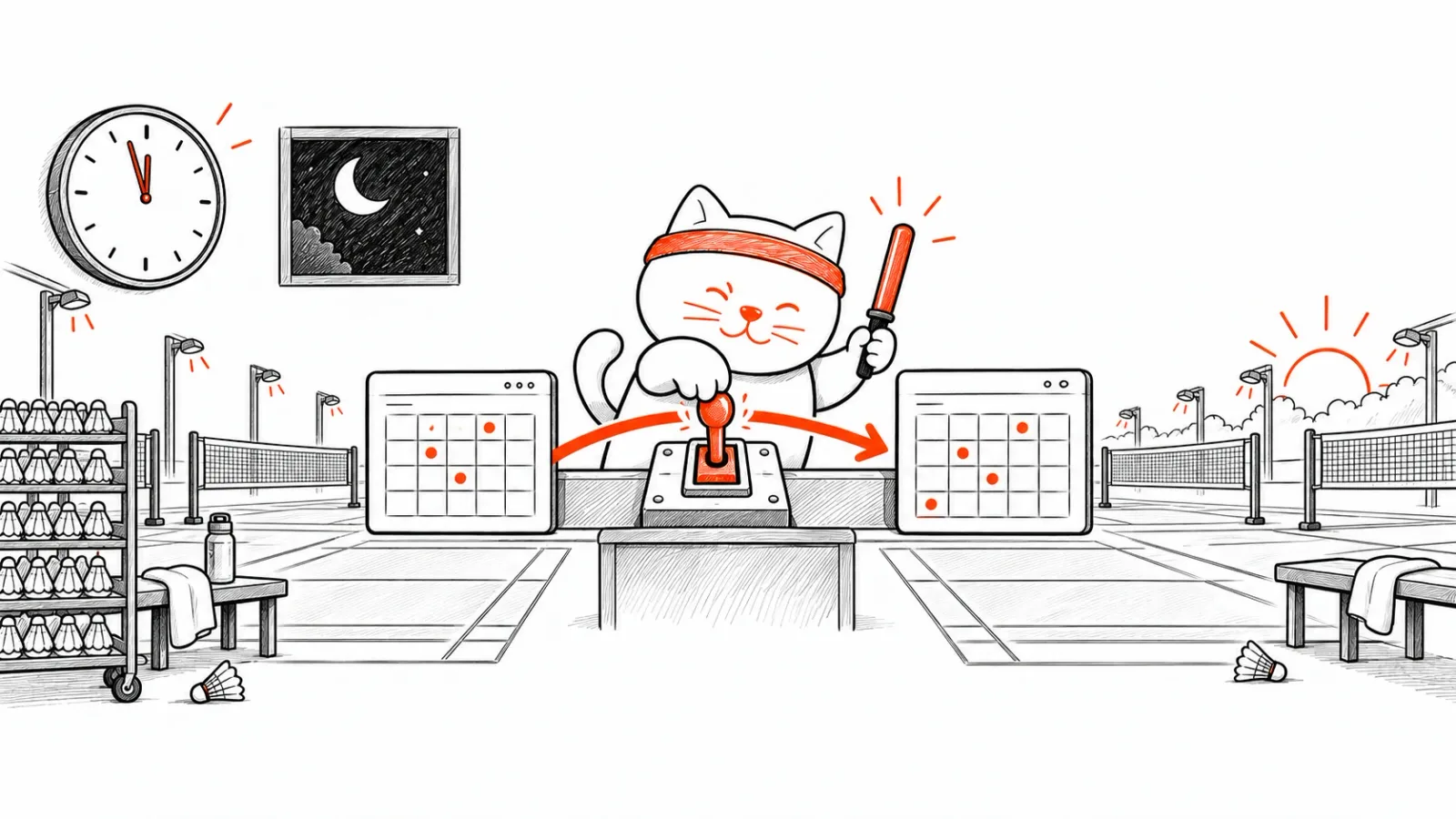
Cutover night — after close. The switch is scheduled for an agreed date and executed after the last court of the night is done. Nobody is mid-booking, no payment is in flight, and the venue opens the next morning on the new system. Downtime for the centre: zero hours. Trading was never interrupted.
On the old system — bookings get switched off, not deleted. The YepBooking portal has its booking function disabled and now points players to the Daifo booking page instead. That matters more than it sounds: the old URL is what’s saved in people’s browsers, printed on signage, and linked from years of Facebook posts. Leaving it live as a signpost catches the traffic that would otherwise bounce.
For players — nothing to do. Accounts, contact details and credit balances came across, so the regulars sign in and their money is where they left it. No re-registration, no support queue, no “I had $80 in there.”
| Migrated to Daifo | |
|---|---|
| Member accounts | ~3,400, with contact details |
| Stored credit balances | Yes — in full, into Daifo Credit |
| Credit top-up history | Yes — the complete record, not just the closing figure |
| Courts | 16 |
| Re-registration required | None |
| Centre downtime | Zero — cutover ran after close |
The top-up history is the part owners tend not to ask about and then need within a fortnight. When a member queries their balance, “the system says $62” is a weaker answer than being able to show every top-up and every booking that drew it down. Migrating the closing number alone would have looked fine on day one and caused arguments by week two.
The migration is the hard part. What it buys is the interesting part.
Its own app, under its own name. Stormers R now publishes a branded booking app on both stores — App Store and Google Play — rather than sending players to a vendor-branded web portal they have to bookmark. That’s a home-screen icon, push notifications and wallet-style credit, published under the centre’s name. (More on how that works: your own branded booking app.)
AI analysis of their own booking data. Daifo has a built-in assistant, Fofo, that reads the centre’s actual bookings and answers questions in plain language — which slots are dying, which regulars have quietly stopped coming, how this week compares to last. It’s the reporting layer most centres never get around to building out of spreadsheets, and it arrives with the booking data rather than as a separate exercise.
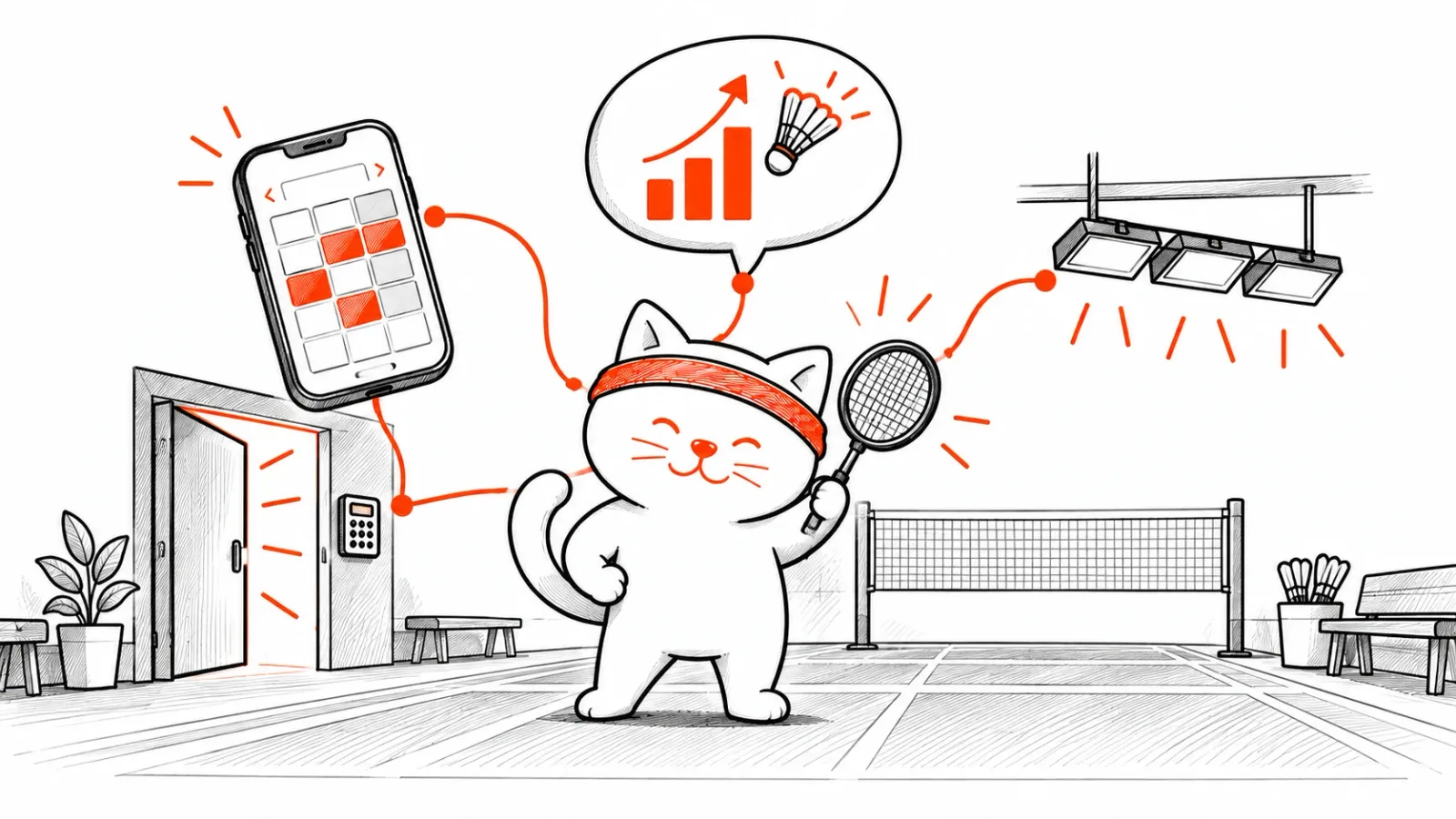
A path to running unstaffed. The centre is now set up to add smart door access and court lighting control on top of the same booking data — each booking issuing its own access code, lights following the schedule. It isn’t switched on yet; the point is that it’s now a settings change rather than a new platform.
A back office in English and Chinese. Daifo’s merchant portal runs bilingually, which for a lot of Australian centres is the difference between the owner doing all the admin personally and the floor staff being able to handle it.
A support team in the same country and the same sport. We’re based in Australia and every venue we work with is a racket-sports centre, so the questions that come in — peak pricing on a public holiday, how socials should handle no-shows, what to do with a coaching block that overruns — land with people who’ve solved them at another centre already. That’s also the practical answer to the push factor: the fix is someone who picks up, not a ticket number.
If you want the feature-by-feature version rather than the migration story, we’ve written that up separately: Daifo vs YepBooking: which badminton booking system fits your centre?
None of this is Daifo-specific advice — run it against any vendor you’re evaluating, including us:
A 16-court centre with 3,400 members moved booking systems on a Sunday night and opened as normal on Monday, with every balance intact and nobody re-registering. If the migration risk is the only thing keeping you on a system you’ve outgrown, it’s worth finding out how small that risk actually is.
See the product pages
Badminton court booking & scheduling software — court scheduling, online reservations, payments, memberships, smart pricing and 24/7 unmanned access.
Your own branded booking app — published under your centre’s name on the App Store and Google Play.
Badminton court booking software NZ — NZD payments and New Zealand payouts.
Running other courts too? Pickleball court booking software and tennis court booking software run on the same platform.
Thinking about the move? Book a 20-minute demo and we’ll look at your current system together — what migrates, what doesn’t, and what your cutover night would look like.